How to Make Korean Knife-Cut Noodles (Kalguksu) – Traditional Homemade Recipe
How to Make Korean Knife-Cut Noodles (Kalguksu)
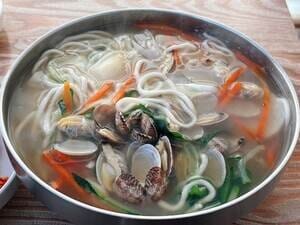
Kalguksu is one of Korea’s most beloved traditional noodle soups. The name literally means “knife-cut noodles” – and that’s exactly what they are! You roll out flour dough by hand, then slice it into thick, chewy noodles that get cooked in a rich, warming broth.
What makes this dish so special? It’s the perfect comfort food that brings families together. The chewy texture of handmade noodles, the clear and flavorful broth, and colorful toppings make it a hit with everyone from kids to grandparents.
Today, I’ll walk you through everything – from mixing the dough to ladling that final, steaming bowl. Don’t worry if you’re new to Korean cooking! I’ve included plenty of tips and shortcuts to help you nail this recipe on your first try.
What You’ll Need: Ingredients and Prep
For the Noodle Dough (serves 2-3 people)
- 2½ cups all-purpose flour
- ½ cup water
- 1 teaspoon salt
- 1 teaspoon cooking oil (optional, but helps with texture)
For the Broth
- 10 dried anchovies (heads and guts removed)
- 1 piece of dried kelp (about 4×4 inches)
- 2 dried shiitake mushrooms
- 1 medium onion
- 7 oz Korean radish (or daikon radish)
- 6 cups water
For the Toppings
- 1 small zucchini
- 1 medium potato
- 1 carrot
- 2 green onions
- 2 cloves garlic (minced)
- Soy sauce, salt, and pepper to taste
Step-by-Step: Making Perfect Kalguksu
Step 1: Make the Noodle Dough
Mix flour, salt, and water in a large bowl. The dough will look pretty rough at first – that’s totally normal! Knead it for about 10 minutes until it becomes smooth and elastic.
Here’s the secret: let it rest for at least 30 minutes. Cover with a damp cloth and just let it chill. This resting time is what gives you those perfectly chewy noodles.
Step 2: Start Your Broth
While your dough is resting, get that broth going. Put water, anchovies, kelp, mushrooms, onion, and radish in a large pot. Bring to a boil, then simmer for about 20 minutes.
Pro tip: Remove the kelp after 10 minutes – any longer and it can make your broth a bit slimy.
Step 3: Roll and Cut Your Noodles
This is the fun part! Roll your rested dough as thin as you can – about ⅛ inch thick works great. Dust with flour so it doesn’t stick, then fold it over a few times.
Now grab a sharp knife and cut into strips about ¼ inch wide. Don’t stress about making them perfect – handmade noodles are supposed to look a little rustic!
Step 4: Prep Your Vegetables
While you’re cutting noodles, julienne your zucchini, potato, and carrot into thin strips. Chop your green onions into small rounds. Having everything ready makes the final cooking super smooth.
Step 5: Cook Everything Together
Strain your broth to remove all the solids. Bring it back to a boil and add the potato first (it takes longest to cook). After 3-4 minutes, add your noodles.
Once the noodles start floating (about 3-5 minutes), toss in the zucchini and carrot. Cook for another 2-3 minutes until everything is tender.
Step 6: Season and Serve
Season your soup with soy sauce, salt, and pepper to taste. Add the minced garlic and green onions right at the end – they’ll give you the freshest flavor.
Ladle into bowls and serve immediately while it’s piping hot!
Tips to Take Your Kalguksu to the Next Level
Noodle texture matters: That 30-minute rest isn’t optional! It’s what transforms tough dough into silky, chewy noodles.
Don’t overcook the kelp: Ten minutes max, or your broth might get thick and gummy.
Make it your own: Try adding clams for seafood kalguksu, chicken for protein, or even kimchi for a spicy kick!
Perfect pairing: Serve with some crunchy kimchi on the side. The tangy, spicy flavors are absolutely perfect with the mild, comforting noodle soup.
Why You’ll Love Making This at Home
Kalguksu isn’t just a meal – it’s like a warm hug in a bowl. There’s something deeply satisfying about making noodles from scratch, watching them transform from simple flour and water into something so comforting.
Sure, it takes a bit more effort than opening a packet of instant noodles, but trust me – the payoff is huge. Every slurp reminds you why homemade is always better.
Plus, once you get the hang of it, you can customize it however you like. Vegetarian? Skip the anchovies and use vegetable stock. Want more protein? Add some shredded chicken or tofu.
So grab your apron and give this recipe a try! Your kitchen will smell amazing, and you’ll have a delicious, authentic Korean meal that’ll warm you from the inside out.
Happy cooking!
Thank you for reading this post.
Please note: We do not encourage underage drinking. Enjoy responsibly.