Best Korean Japchae Recipe (Authentic Sweet Potato Glass Noodles)
Best Korean Japchae Recipe (Authentic Sweet Potato Glass Noodles)
Chuseok is one of Korea’s biggest holidays, when families come together to share delicious food around a table full of amazing dishes.
Among all the traditional foods, japchae is definitely a must-have that nobody can resist.
This colorful stir-fried noodle dish combines vegetables, meat, and sweet potato starch noodles in a way that appeals to everyone, from kids to grandparents.
In this post, I’ll walk you through how to make authentic japchae step by step, so even if you’re new to Korean cooking, you can totally nail it. I’ll share the traditional method along with some handy shortcuts to help you capture that real Chuseok spirit in your own kitchen.
Getting Your Fresh Ingredients Ready (The Simple Part)
The first thing you need for great japchae is fresh, quality ingredients. Since this dish brings together so many different vegetables and meat, choosing good ingredients really makes or breaks the final taste. Here’s what you’ll need for the basics:
- Sweet potato starch noodles (called “dangmyeon”): These clear, chewy noodles are the heart of any good japchae
- Beef or pork: This adds that rich, savory flavor that makes the dish so satisfying
- Vegetables: Spinach, carrots, onions, and mushrooms (shiitake or wood ear mushrooms work great)
- Seasonings: Soy sauce, sugar, minced garlic, sesame oil, and toasted sesame seeds
Prepping your ingredients isn’t just about washing and chopping – you want to handle each vegetable in a way that keeps its texture and color looking amazing.
For example, carrots should be julienned really thin so they stay tender, while spinach needs to be blanched quickly to keep that bright green color and nutrients. M
ushrooms taste way better when you sauté them lightly first to bring out their deep, earthy flavor.
These steps might seem like extra work, but they’re what make japchae so visually stunning.
One of the reasons this dish is such a hit at Chuseok celebrations is because of how beautiful and colorful it looks on the table.
Step-by-Step Cooking Guide (The Traditional Way)
Japchae might look complicated at first glance, but when you break it down into steps, it’s actually pretty manageable. The traditional method involves cooking each ingredient separately to bring out its best flavor, then bringing everything together at the end.
- Cook the noodles: Boil the sweet potato noodles in plenty of water for about 6-7 minutes. Once they’re done, rinse them in cold water and squeeze out excess water. Toss them with a little soy sauce and sesame oil to give them a head start on flavor.
- Cook the meat: Season your beef with soy sauce, sugar, minced garlic, and a pinch of black pepper. Let it marinate for about 10 minutes, then stir-fry it over medium heat. Don’t overcook it – you want to keep those juices locked in.
- Prep and cook the vegetables: Cook your carrots, onions, and mushrooms separately with just a pinch of salt. For the spinach, blanch it quickly in boiling water, then rinse it in cold water, squeeze out the water, and season with sesame oil and salt.
- Bring it all together: In a large bowl, combine the noodles, meat, and all your vegetables. Add your final seasonings (soy sauce, sugar, sesame oil, sesame seeds) and gently mix everything together. Use your hands or chopsticks to toss it lightly – you don’t want to mush anything.
This traditional approach is all about letting each ingredient shine while creating perfect harmony in the final dish.
Sure, cooking everything separately takes a bit more time, but that’s exactly what gives japchae its clean, balanced taste where no single flavor overpowers the others.
It might seem like extra steps, but trust me – this is what makes the difference between good japchae and amazing japchae.
Making It Look and Taste Amazing (The Popular Secret)
Japchae isn’t just delicious – it’s also a feast for the eyes. The mix of colorful vegetables creates this gorgeous, vibrant dish that makes any dinner table look more festive. That’s why getting the colors right is just as important as getting the taste right.
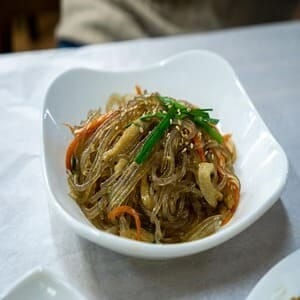
- Color harmony: You’ve got orange carrots, bright green spinach, brown mushrooms, white onions, and those lovely dark noodles all working together to create something that looks as good as it tastes.
- Flavor balance: The sweetness comes from the carrots and onions, the umami depth from the meat and mushrooms, and that nutty richness from the sesame oil and seeds. Every bite gives you a little bit of everything.
- Plating tips: When you serve japchae, pile it up a bit instead of spreading it flat – it looks way more appetizing that way. A sprinkle of sesame seeds on top or a small garnish can make it look restaurant-quality.
This combination of great looks and amazing flavors is why japchae isn’t just for Chuseok anymore. People love making it for housewarming parties, birthdays, and especially when they have international guests over.
For people who’ve never tried Korean food before, japchae is this perfect introduction – it’s exotic enough to be interesting but familiar enough that everyone can enjoy it.
That’s probably why it’s become one of those dishes that really represents Korean home cooking to the world.
Japchae is way more than just a stir-fried noodle dish – it’s this careful process of bringing out the best in each ingredient to create something that represents Korean cooking at its finest.
When families gather around the table for Chuseok and share japchae together, it’s not just about the food – it’s about creating those special moments and memories that last long after the meal is over.
For anyone curious about Korean culture and flavors, making japchae is like getting a delicious crash course in what Korean cooking is all about.
Why not give it a try this season and experience these traditional flavors for yourself?
Thank you for reading this post.
Please note: We do not encourage underage drinking. Enjoy responsibly.